
Utilities4 weeks ago
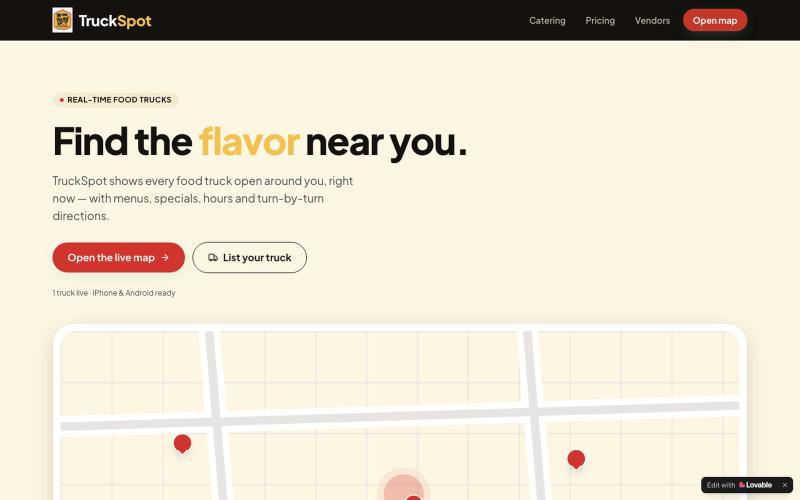
TruckSpot — Find the Flavor Near You
Real-time food truck finder with live map, menus, and daily specials.

@LisaRoseFL · X
Check out what I just built with Lovable!
The full gallery
Tech stack
8 projects
Real-time food truck finder with live map, menus, and daily specials.
@LisaRoseFL · X
Check out what I just built with Lovable!
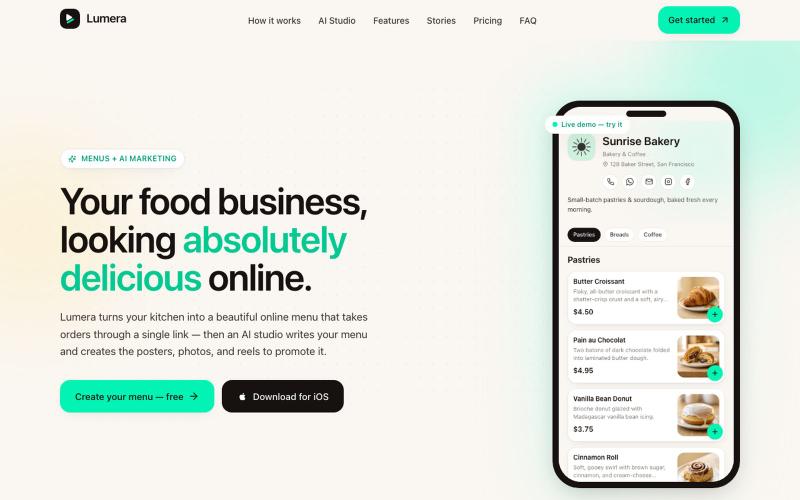
Generate beautiful online menus and AI marketing content for food businesses.

@Lsdavo · X
built in 2 days with claude code. the unlock: gave it our design system first - colors, type, components. after that every iteration stayed on-brand automatically. no mockups. no handoffs. describe → review → refine.
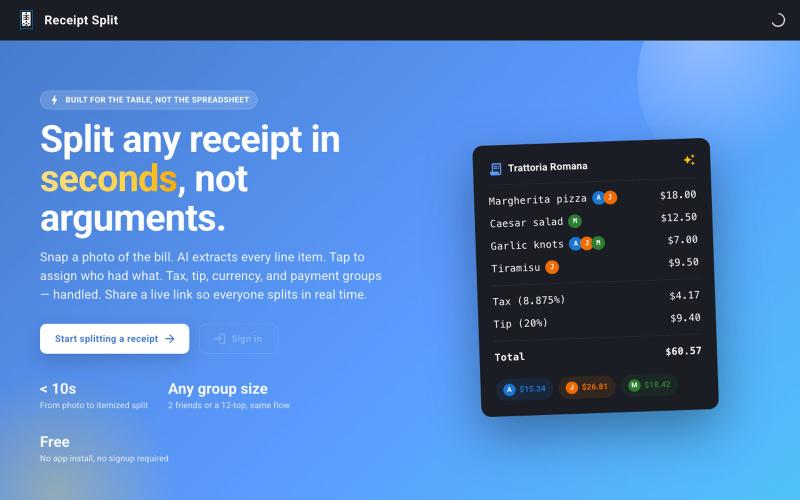
Split restaurant bills by item using AI photo scanning or manual entry.
u/getawaykid · Reddit
I got tired of doing receipt math at restaurants, so I built a free bill splitter with optional AI scanning TL;DR: Receipt Split splits restaurant bills by item. Free for manual entry + real-time sharing. AI photo scanning is optional and costs money to run, so I only charge for that part. I built Receipt Split after one too many dinners where someone said “let’s just split it evenly” while my friend was sitting there with a salad and everyone else had entrees + drinks. It’s a web app —
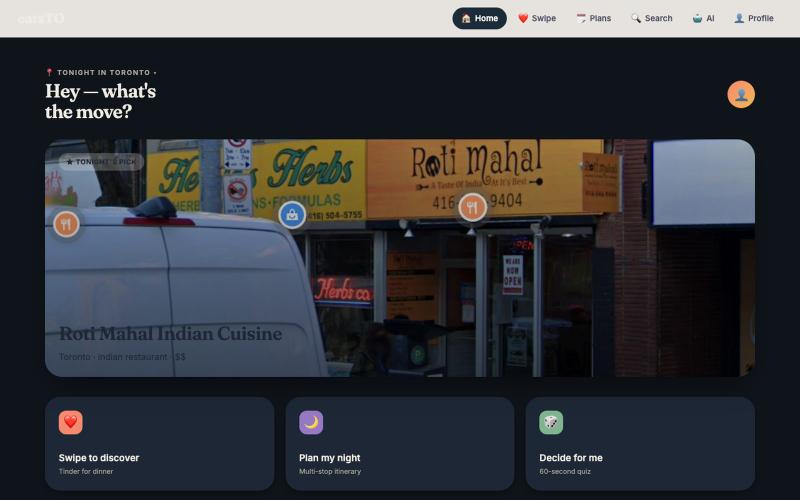
AI tool that picks a restaurant or nightlife spot in Toronto for you in under 10 seconds.
gurunoor_singh · Product Hunt
eatsTO — What's the move tonight? AI-powered food discovery that actually picks for you.
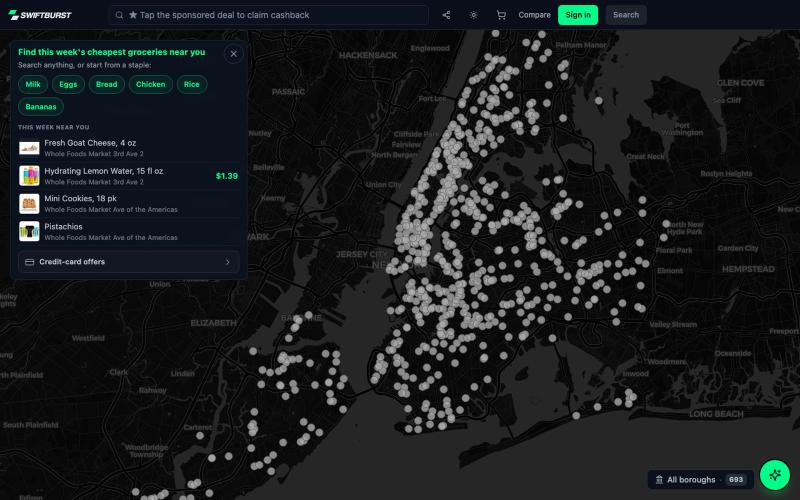
Compare grocery prices and deals across 690+ stores in all NYC boroughs.
eli_yumnik · HN
I built a free app for New Yorkers to save money on groceries
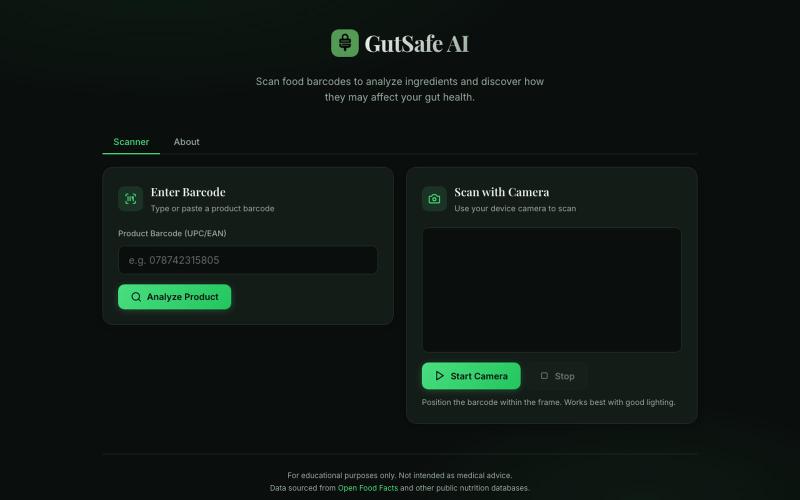
Scan food barcodes to analyze ingredients and get gut health scores

@Sasobhabha · X
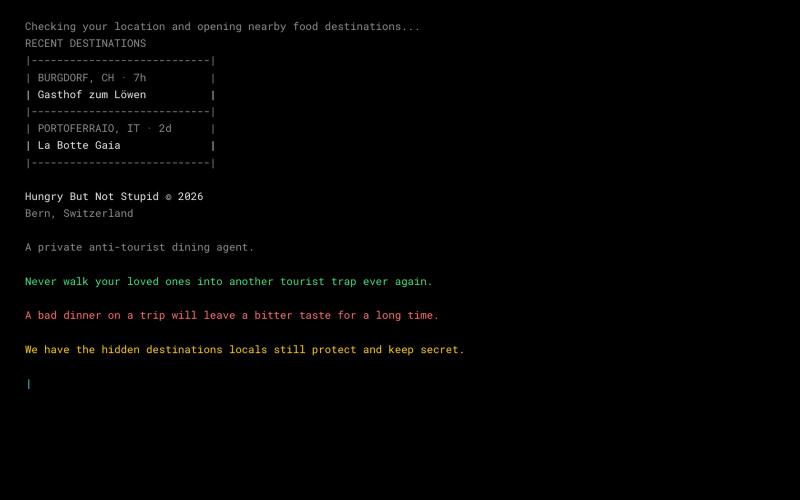
Find restaurants where locals actually eat, filtering out tourist traps.
kingchesco · HN
I know $90 for a dining app sounds absurd. And it’s not even an app; it's a wrapper for an LLM. But it is how it is built that makes it so expensive. I had to make a whole API just to call it (which because its own SAAS). All just to bypass dumb google reviews. Google Maps and reviews send people to places optimized for tourists and good copywriters. To find actual local hole-in-the-walls algorithmically, I had to first build that api (called BWENDI), a "spatial gravity" engine using 100GB+ of tweaked OSM, GeoNames, and other proprietary data. Instead of aggregating reviews, it mathematically calculates foot-traffic, throughput, transaction stats, and economic criticality among other factors. Bwendi is A Python/Node ETL pipeline feeding an LMDB-backed context API. It uses a proprietary 1MB binary grid served via Cloudflare Workers for millisecond edge reads with near-zero overhead, hosted in Switzerland. This was done of course to get the purest location context around every street

Shop curated fashion from exclusive boutiques with instant delivery.

@badnikhill · X