

Finance & Business1 week ago · 1 tries
Fluid Native - The Onchain Marketplace You'll Ever Need
Trade and manage digital assets across 30+ blockchain networks

@abhijeethganji1 · X
The full gallery
Tech stack
23 projects
Trade and manage digital assets across 30+ blockchain networks
@abhijeethganji1 · X
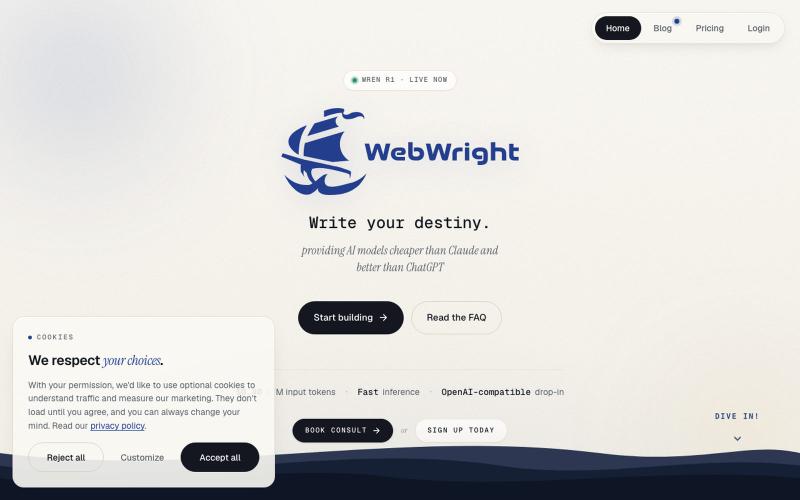
AI API platform offering faster and cheaper alternatives to Claude for developers.

@WebWrightAI · X
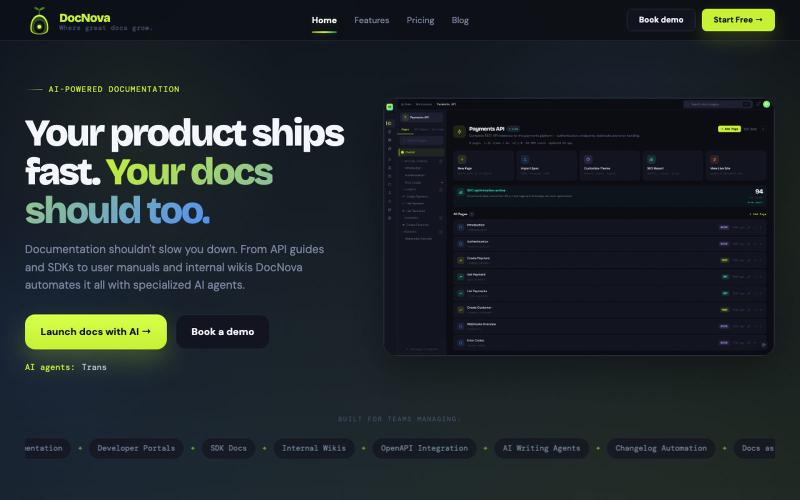
Create branded developer portals from API specs and documentation with AI-assisted writing.

@jitendraballa · X
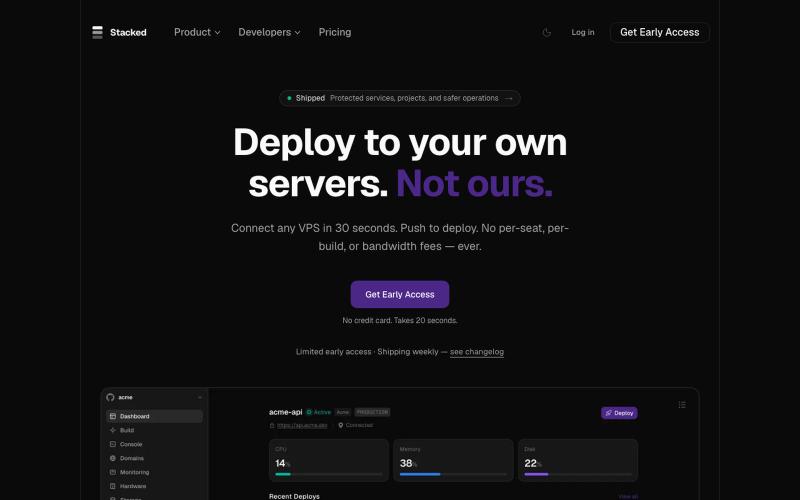
Self-hosted deployment platform offering Vercel-like developer experience on your VPS.

@ohdearkk · X
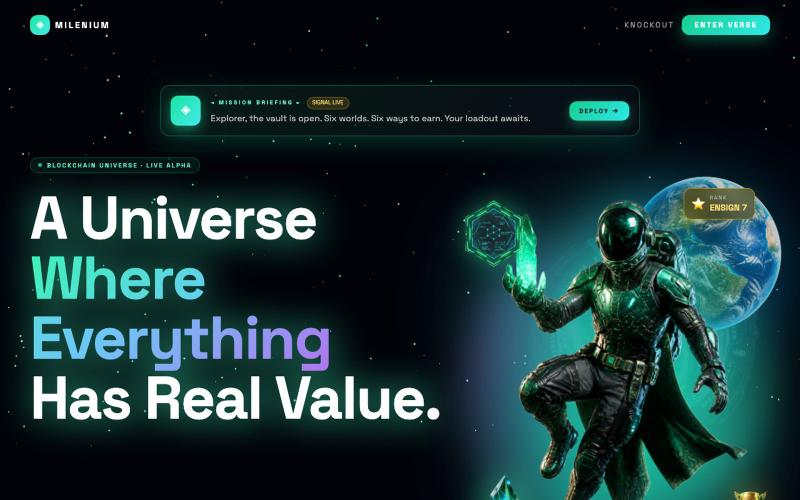
Web3 platform with a fee-free crypto wallet, games, and gamified economy.

@chaos_mln · X
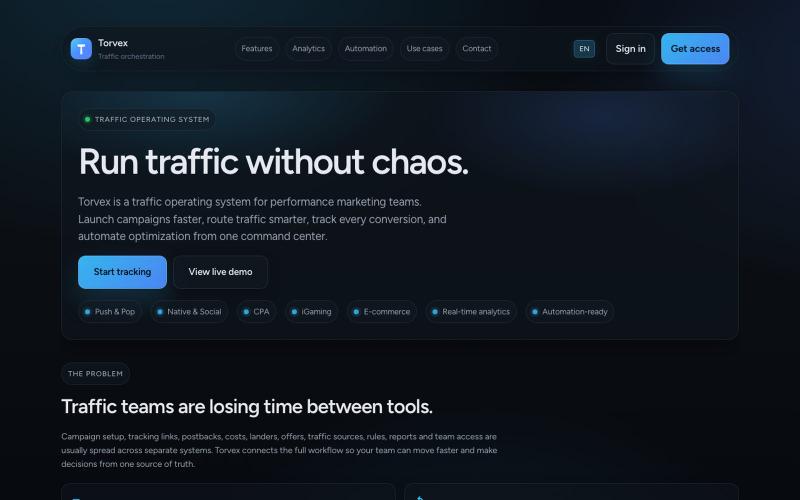
@suni_code https://t.co/OajI3lOKKW - Traffic Orchestration Platform

@KsaAZaks · X
- Traffic Orchestration Platform
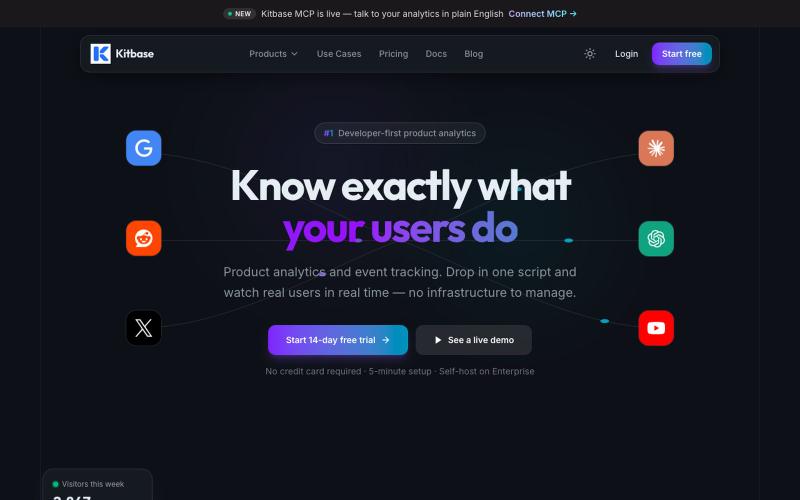
Track user events and understand behavior to ship products faster.

@kitbasedev · X
We just launched, check us out at
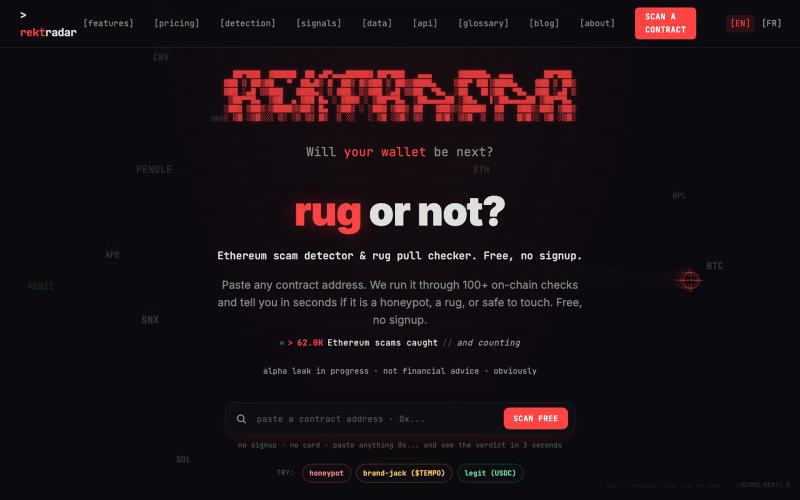
Paste a contract address to detect Ethereum rug pulls and scams instantly.

@mik3fly__ · X
Here is mine: Check for scam before being scammed!
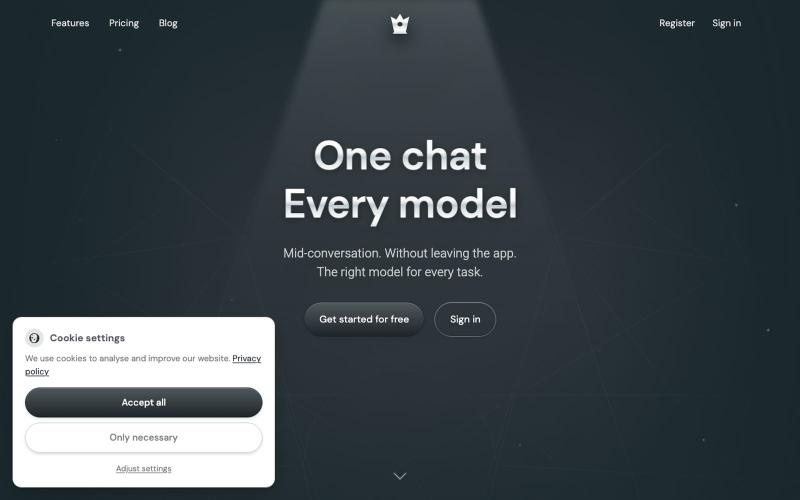
Chat with multiple AI models, build agents, generate images, and analyze PDFs.

@ai_kral · X
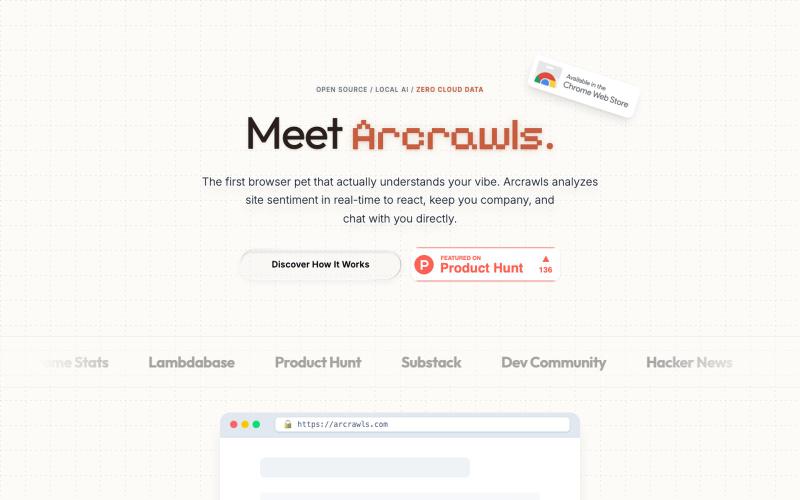
Virtual pet companion that crawls your browser viewport and responds to page topics.

@fujidevv02 · X
the world's first context-aware, local AI browser pet companion!
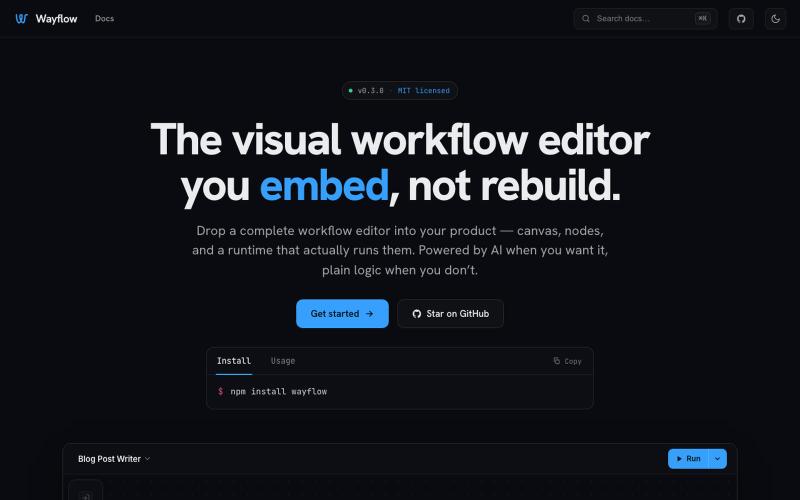
Embeddable visual workflow builder for web apps with optional AI assistance.
tahazsh · HN
Hi! I’m Taha. In many agentic products that support workflows (including one I worked on), I noticed they either don’t support node-based editors, or use React Flow and go through the difficult work of integrating it into their product to run it and work with their existing logic. So I thought about creating a tool that could help with this by closing the gap between the editor and the runtime. That’s why I created Wayflow. The basic architecture is simple: you just need to create a graph (which is a JSON object) that the runtime knows how to run. The runtime doesn’t care where that graph is coming from, it just needs the right schema. And with the help of the editor, you can create the graph, and then export it or directly save it on your backend in your database. And then when you want to execute it, you just hand it to the runtime. The runtime can either stream the execution (which is useful for the editor), or give you the final result. How you execute the graph is up to you: t
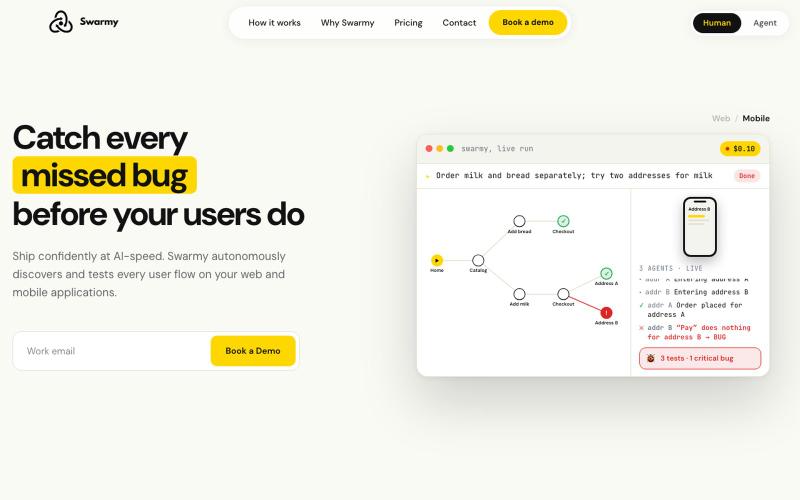
Autonomous QA agents that test web and mobile apps to discover flows, find bugs, and replay test scenarios.

@AbdullahYusufY · X
Here is ours We are developing autonomous QA agents feel free to check it out.