under→the→hood · a ready→made explorer
Drag boxes to visualize how a Flexbox layout engine infers constraints.
drzivil · HN
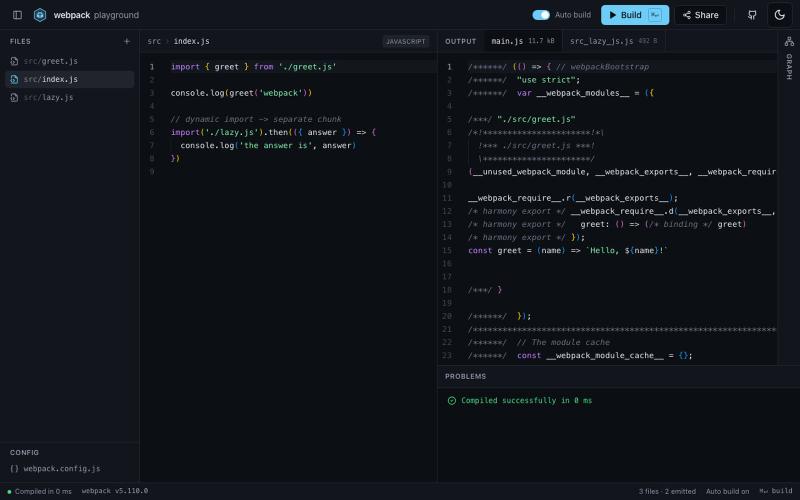
Drag boxes around and watch a layout engine infer the Flexbox (no AI)
The full gallery
Tech stack
60 projects

Drag boxes to visualize how a Flexbox layout engine infers constraints.
drzivil · HN
Drag boxes around and watch a layout engine infer the Flexbox (no AI)

AI tool that generates production-ready sitemaps, schema markup, meta tags, and robots.txt files automatically.
@PeakVisibilitys · X
🚀 AI-powered SEO audits and AI search optimization. Would love some feedback!

Free website analyzer & SEO audit tool — scan any site for performance, SEO, security, accessibility & UI/UX issues in 60 seconds. Fix what hurts your ranking.
@WebScore_now · X

Chrome extension that auto-fills product launch submissions to Product Hunt, Peerlist, and more.
@benvspak · X

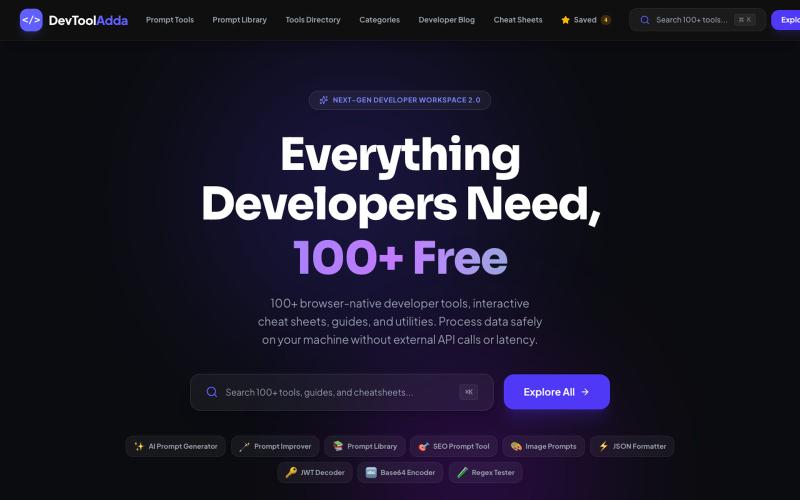
Free frontend developer tools for CSS generation, image compression, and more.
@iamdeepak89 · X

Audit your website's readiness for AI search engines like ChatGPT, Claude, and Perplexity in seconds.
@isreadyai · X
We help check if AI agents can read your site 💚 Free scan, no signup: — 32 checks in 5 seconds across GPTBot, ClaudeBot, Perplexity & more.

Aggregates multiple search engines and tools in a minimal, ad-free interface.
@thinking_555 · X
🚀 我做了一个超有意思的网站! 「S」—— 一个极简、纯粹、能让你安静思考的地方。 没有广告、没有推送、没有干扰,只有干净的内容和思考空间。 感兴趣的朋友欢迎来坐坐 👉 #极简 #思考 #个人网站 #极简搜索

Turn YouTube videos, PDFs, and URLs into Anki flashcard decks in seconds.
u/holios89 · Reddit
Built an AI SaaS that turns your notes/articles/PDFs into study flashcards — looking for harsh feedback (and bugs) Hey folks, Solo/small side project here: Deckly ( deckly.one ) — an AI-powered flashcard generator for spaced-repetition learning (Anki-compatible export). You give it text, a PDF, or an article link, it generates a deck of flashcards (Q&A, Cloze, or multiple choice), optionally with TTS audio and images per card, and you can study it right in the browser or export to `.apkg`.

A visualization language designed for AI agents to create and interact with charts.
chenglong-hn · HN
Data visualizations are the bridge between user and data. But building AI agents that can generate visualizations reliably can be very tricky: - simple chart specs can be reliable, but generated charts are often of low quality due to reliance on system defaults; - complex chart specs with explicit details can produce good-looking charts, but they are verbose and agents can struggle with reliability We figured out it is a limitation on the language issue (not just AI capability thing) -- current visualization languages are a bit too low-level for AI agents, requiring them to explicitly make visual decisions that are supposed to be handled by a good compiler. Flint is a visualization intermediate language to address this issue, allow AI agents to solve this last-mile human-agent interaction problem. It provides a simple semantic-type based specification, and contains a layout optimization engine that can produce good-looking charts (filled with derived low-level details) from simple

Capture UI elements with code context and screenshots to share with AI agents for debugging visual bugs.
Loerei · HN
I found that describing where a broken UI is and taking screenshots for AI agents really sucks. I’m too lazy to explain an indescribable visual bug or capture a millisecond-long flash. I also don’t want to remember which file defines an element, whether it's right in the .tsx or a problem with the Parent Styles in .css. And even if you can point out the exact file, your agent still has to dig through thousands of lines of code to know what on earth you're yapping about. In a 7700-file monorepo like Cal.com, simply giving the right file in the prompt for your agent saves about 68.9% of execution time and 94.2% of the tokens your agent needs to digest. HoverSource gives all the needed information and further pushes it to -88.5% time and -94.5% tokens, basically skipping the entire digging session and jumping straight to reasoning and executing. The save is linear to how big your codebase is. I want to save tokens, but don’t want to spend my time and energy digging manually, and a junio

Local-first cognitive runtime with live AST graphs, runs in your browser with no data sharing.
@fortsignal1 · X

React library with 60+ scroll-driven section transitions for modern websites.
@itz_sayan_03 · X
Ever wondered how cinematic scroll-driven websites are built? 👀 Meet SectionFlow—an open-source React library with 60+ ready-to-use section transitions, a one-command CLI, reusable sections, and optimized performance. 🚀