
Other2 days ago
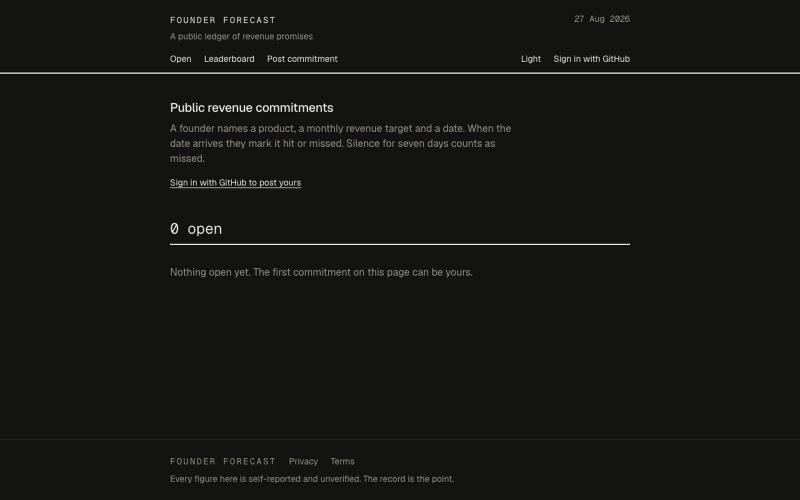
Founder Forecast — public revenue commitments
Indie hackers publicly commit to a revenue milestone by a date. The commitment is public. So is the track record.

@msaswat07 · X
A public ledger of revenue promises
The full gallery
Tech stack
60 projects
Indie hackers publicly commit to a revenue milestone by a date. The commitment is public. So is the track record.
@msaswat07 · X
A public ledger of revenue promises
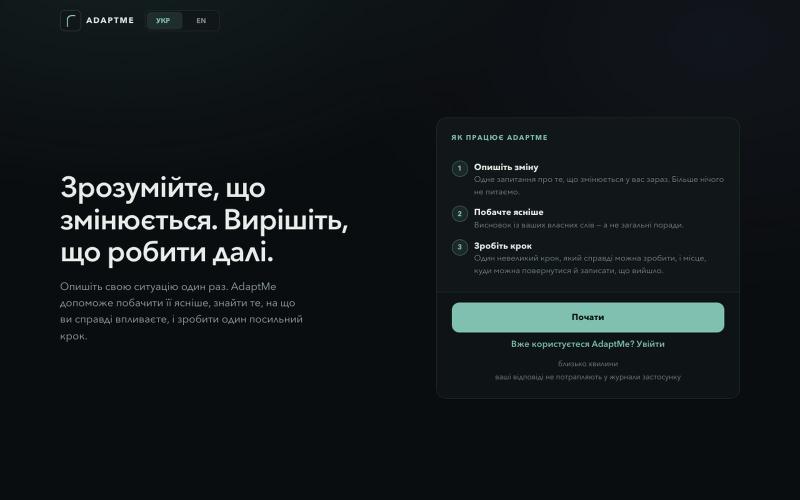
Make sense of change, notice what matters, and choose one useful next step.

@BohdanBalanyk · X
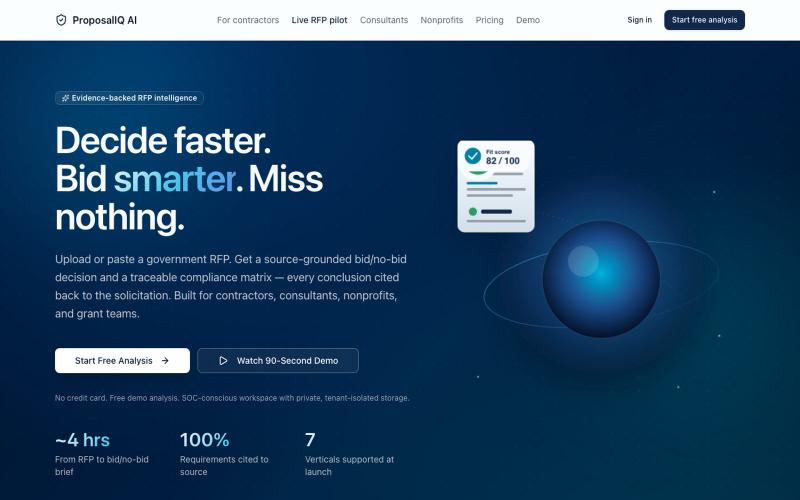
Evidence-backed RFP qualification and traceable compliance matrix for U.S. professional-services firms, consultants, nonprofits, and grant teams.

@DarnleyW96447 · X
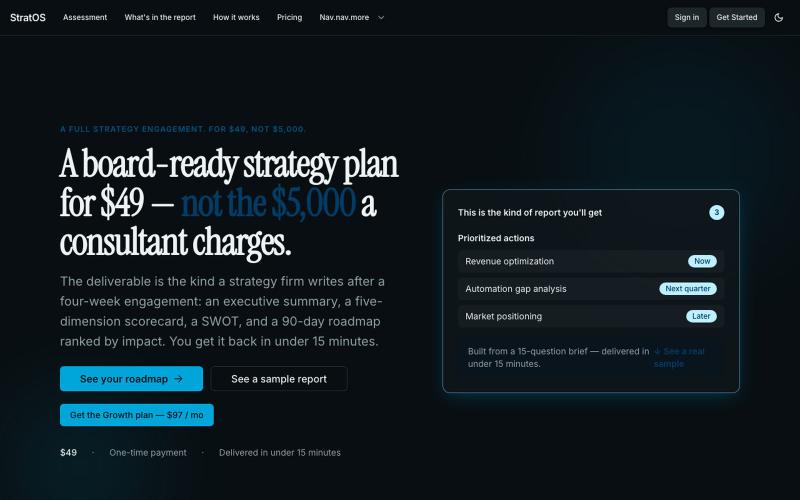
Generate SWOT analysis and 90-day strategic roadmap for your business in minutes.

@StratOSHQgrowth · X
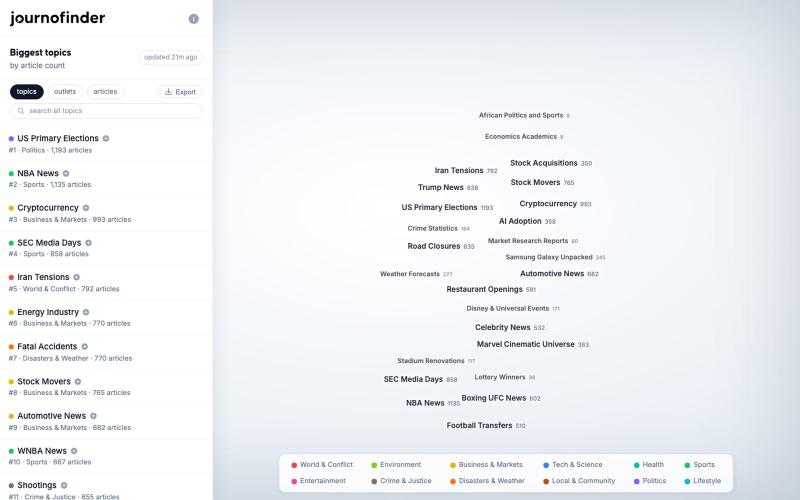
Explore an hourly-updated map of the news cycle with 150,000+ stories clustered by topic.
sach90 · HN
A live map of the news cycle, rebuilt hourly from embedded headlines
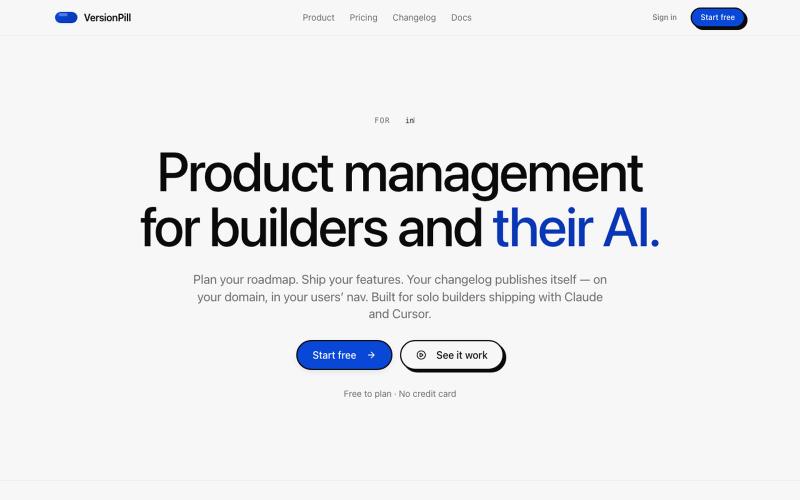
Create AI-powered product roadmaps, manage tasks, and collect feature feedback.

@jimmy_harika · X
TLDR: Notion shipped my exact app that I have using in my daily workflow from last 2 years. Try here: It got a mcp that wires to your claude code and codex. Git integration is almost complete and will ship in coming days
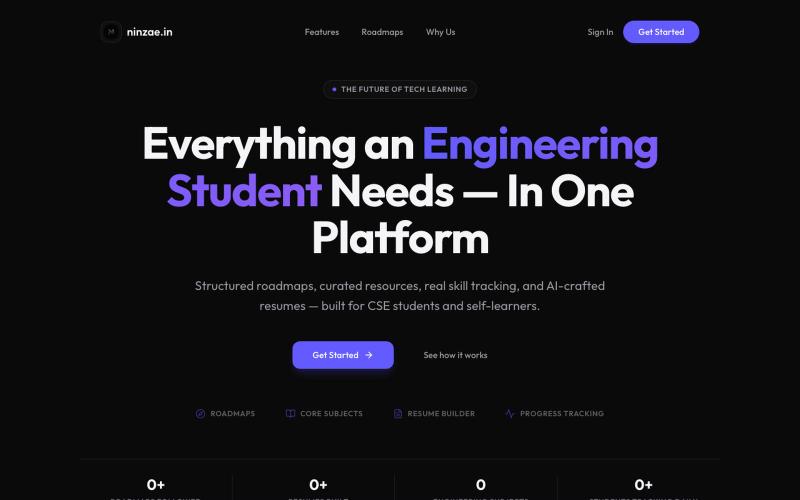
Browse curated learning roadmaps and resources for AI, Data Science, Web Development, and modern tech skills.

@UmarIqbal000 · X
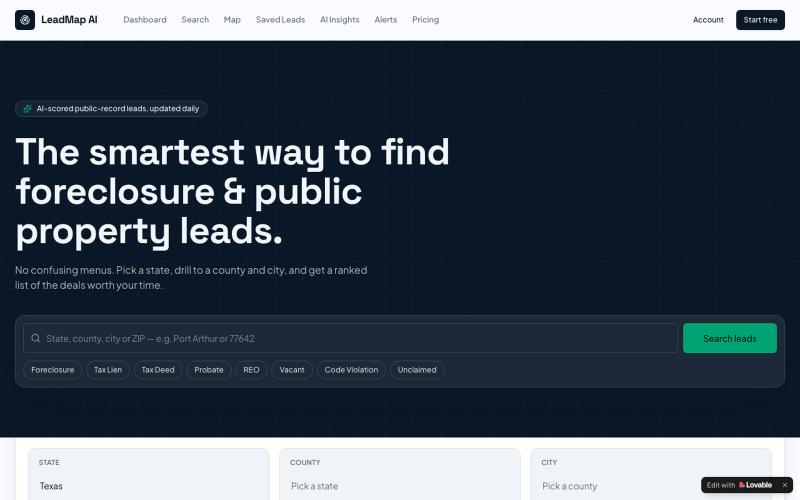
Search foreclosures, tax liens, probate, REO and vacant property leads by state, county, city or ZIP — with AI scoring that ranks the best deals first.

@SimonPardoJr1 · X
Check out what I just built with Lovable!
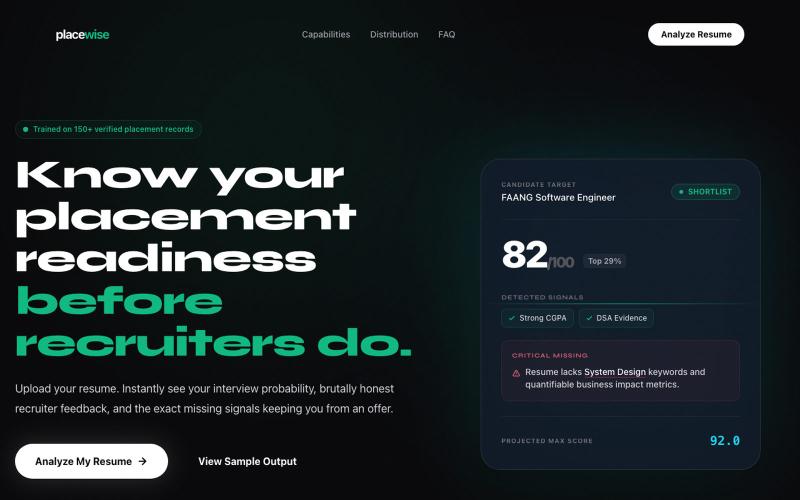
Upload your resume to receive a placement score, identify skill gaps, and get a personalized career roadmap.
u/Dry_Information_9903 · Reddit
1,000+ unique users across 11+ countries and this is just the beginning. A few weeks ago, PlaceWise was just an idea. Today, it's being used by people across 11+ countries, and seeing people I've never met use something I built is an incredible feeling. Some milestones I'm really proud of: 🌍 Users from 11+ countries 📈 1,000+ unique visitors 📄 450+ AI-powered resume reviews A huge thank you to everyone who's tried PlaceWise, shared it, or sent feedback. Every bit of support has hel
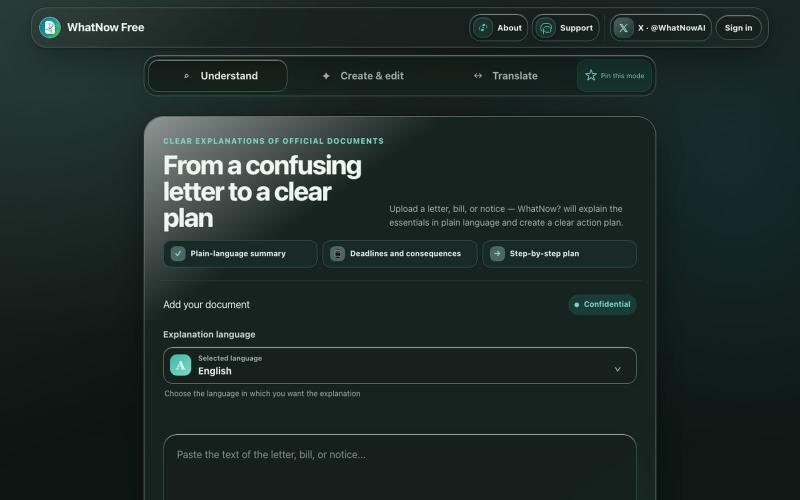
Plain-language document explanations, action plans, a private calendar, and reminders.

@TJeparskis · X
I’m still in school, so I’m only beginning to explore the world of AI. For now, I mostly build projects for myself, but this is what I’ve managed to create so far:
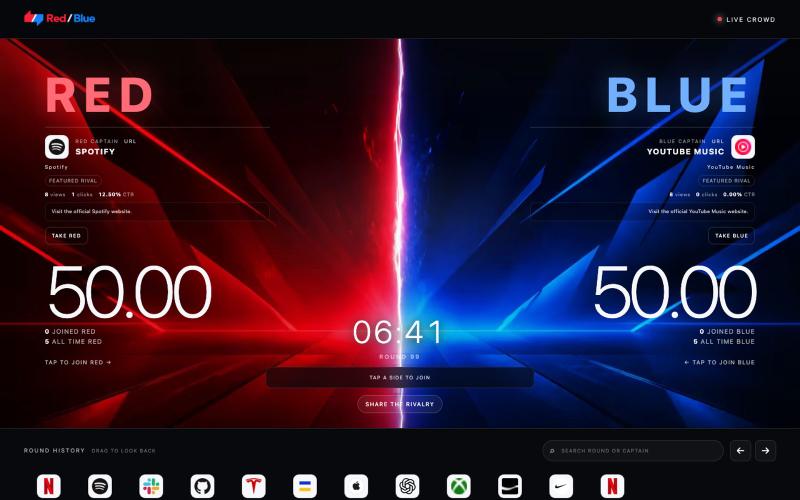
A live two-sided competition giving people and projects a public moment to defend, share, and remember. Pick a side. Move the field.

@RedBlueFight · X
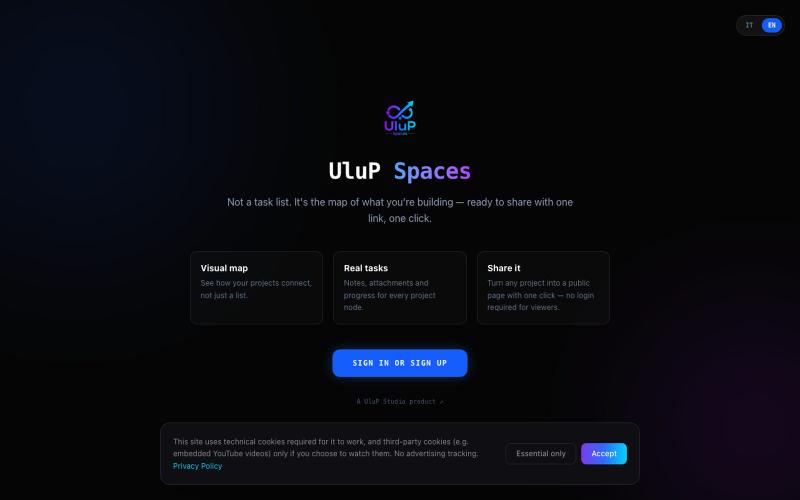
UluP Spaces is a visual project management tool where your work lives as a map of connected nodes instead of another endless list. Organize tasks, connect ideas, and collaborate wi

@UluPStudio · X
Visual projects, Focus Mode, Present Mode, collaboration, UluP Share, community templates — and native MCP support for Claude.