

Developer Tools1 month ago
OpzyAI — Security for apps built with AI
Scan AI-built apps for security vulnerabilities including leaked keys and exposed config.
thfothijn · Product Hunt
OpzyAI Finds what your AI-built app leaks — your editor fixes it
The full gallery
Tech stack
29 projects
Scan AI-built apps for security vulnerabilities including leaked keys and exposed config.
thfothijn · Product Hunt
OpzyAI Finds what your AI-built app leaks — your editor fixes it
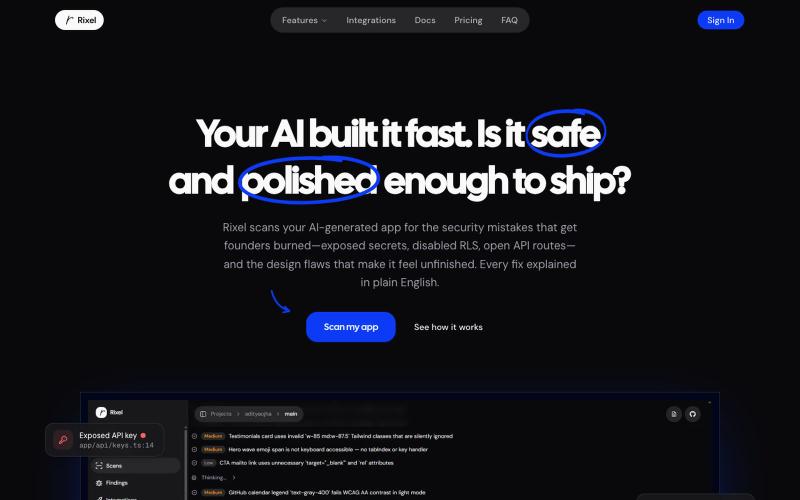
Run manual security and design audits on AI-built apps, review structured findings, compare regressions, and open focused fix pull requests with Rixel.

@AdiKodez · X
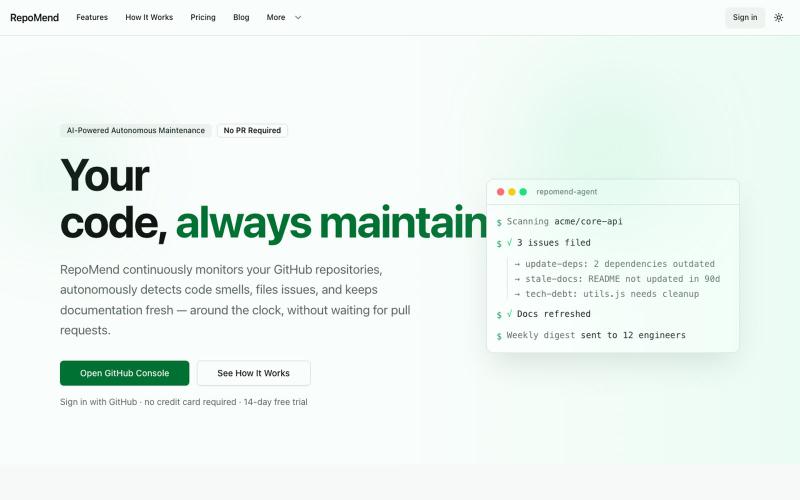
Scans code diffs for security secrets and code quality issues.

@RepoMend02 · X
Vibe-coded your MVP in a weekend? Cute. RepoMend reads every diff and hunts the secrets your AI forgot to redact. The auditor the AI forgot to build.
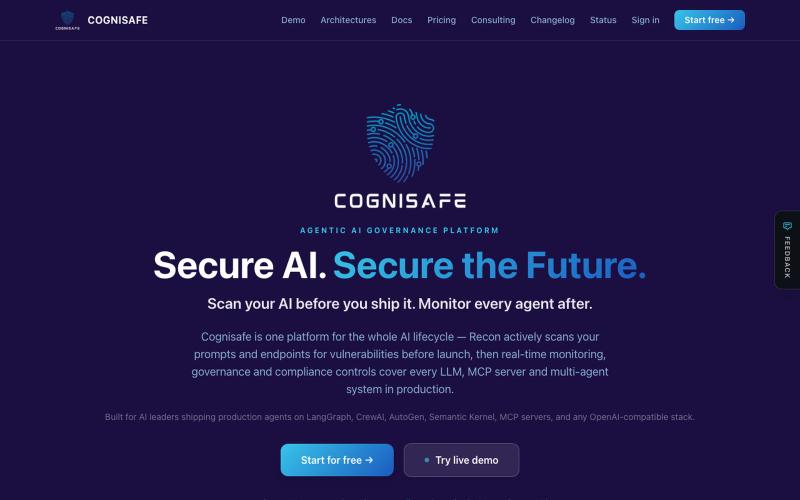
Scan AI prompts and endpoints for vulnerabilities, then monitor LLMs in production for security and compliance.

@CognisafeUK · X
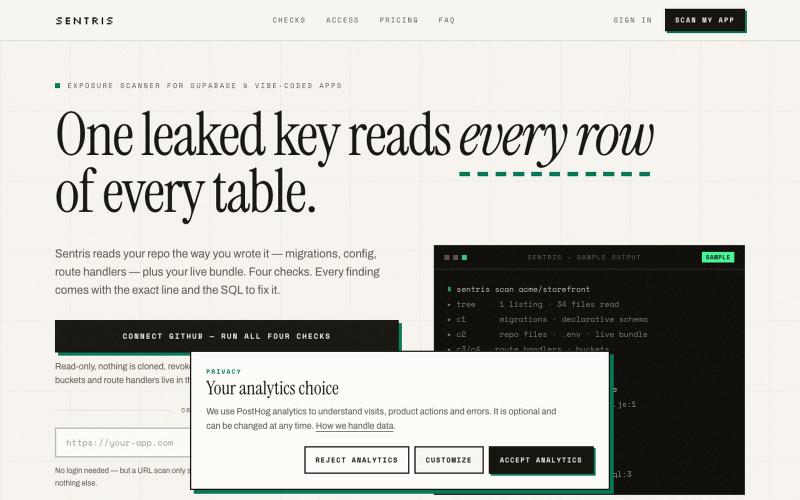
Scan Supabase apps for security issues: leaked keys, missing RLS, and public buckets.

@urti_luca · X
Sentris finds the exposures in your Supabase app before someone else does.
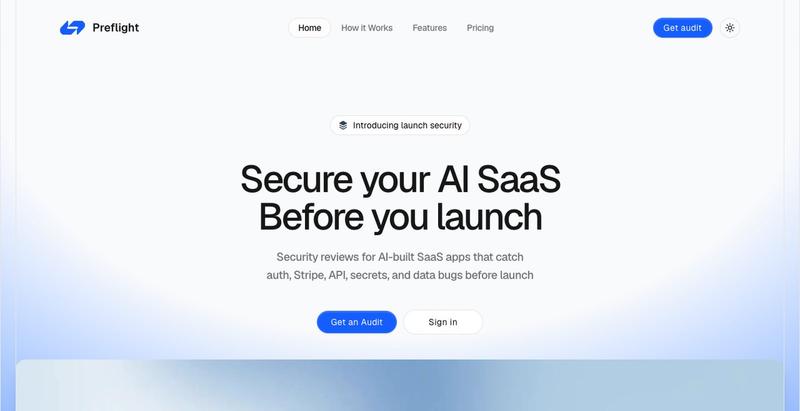
Automated security audits for GitHub repositories to catch secrets, auth issues, and deployment problems.

@emanueldev4 · X
Building Preflight a simple way to catch issues before your website goes live.
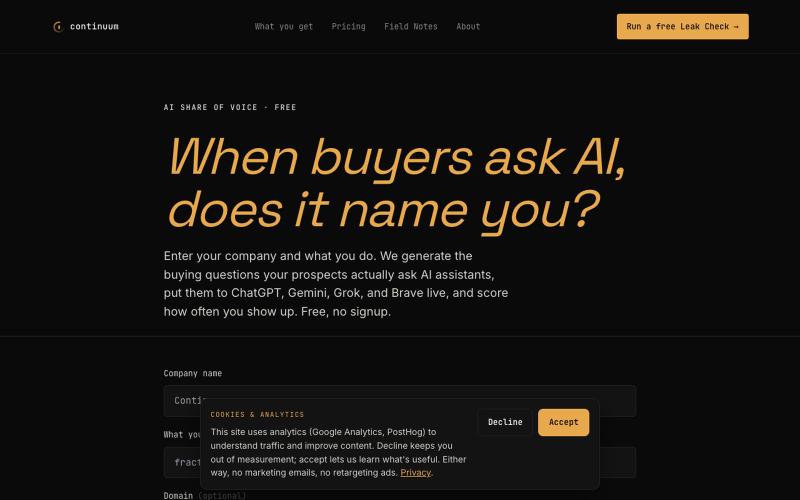
Audit AI-built applications for security vulnerabilities and receive proof of findings.
u/mrtrly · Reddit
I asked ChatGPT 20 different ways who could fix a half-built app. It never named my company once. I do codebase rescue for founders in exactly that spot, so that one stung. There are already plenty of tools that measure this kind of AI visibility, a CDN even ships one free, so I built mine mostly to see my own number, and it confirmed the bad news: near zero. The measuring turned out to be the easy part. What none of the tools do, and what I actually care about, is the fix: getting the mode
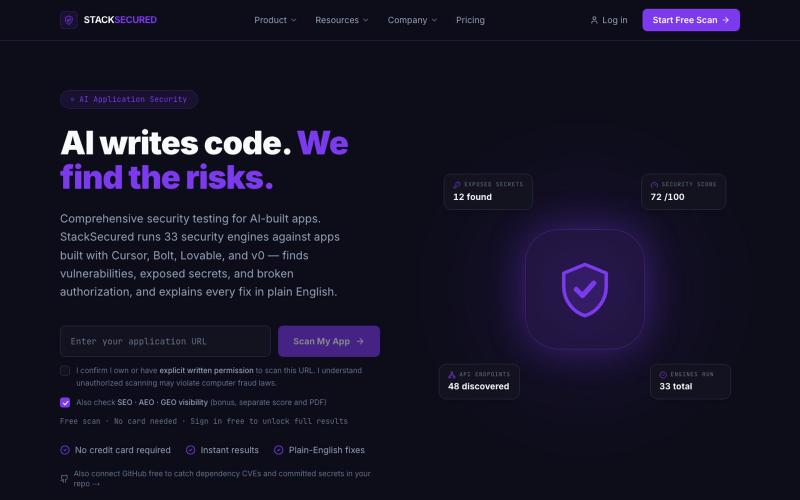
Find security holes in your AI-built app before hackers do. StackSecured scans for exposed keys, injection flaws, CVEs and more — with copy-paste fixes.

@djdeepakjha · X
AI can build your startup in days. But who checks the security? Public configs. Weak APIs. Exposed secrets. If AI built your app, scan it before someone else does. 🔒 StackSecured — security assessment #CyberSecurity #VibeCoding #AppSecurity
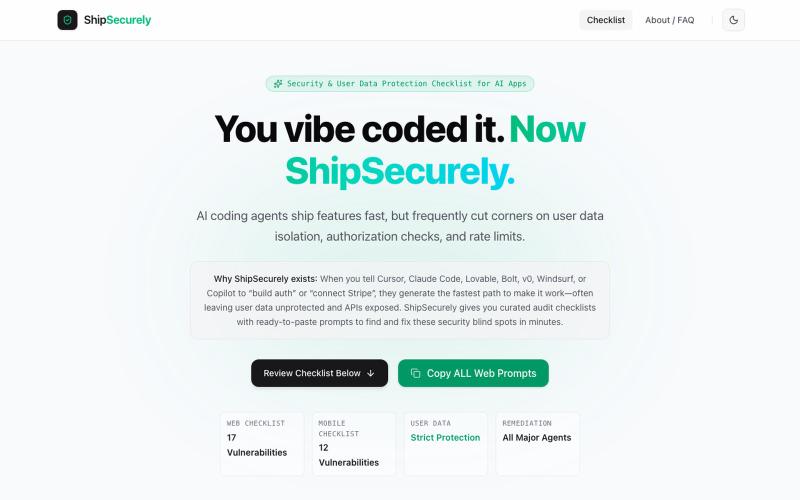
Free security checklist with copy-paste audit prompts for AI-built apps.

@zeeshan4015 · X
You vibe coded it. Now secure it. 🛡️ ShipSecurely — a free security checklist with 1-click audit prompts for Coding agents. Find and fix security vulnerabilities: Just copy paste the prompts to your coding agent and fix critical ones before launching
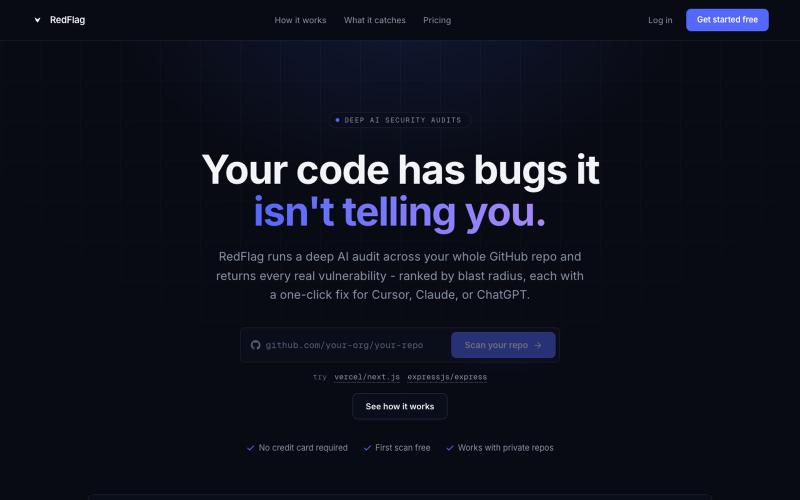
AI-powered security auditor that scans GitHub repos to find vulnerabilities and suggest fixes.
u/uwais_ish · Reddit
Three weeks to build an AI security scanner. The scanner was the easy part. Shipped RedFlag this month. Breakdown of where the time actually went, because it was nothing like I estimated. Stack: Next.js 16, Auth.js v5, MongoDB, Stripe, OpenAI. Deployed on Vercel. What I thought would be hard: getting an LLM to find real vulnerabilities. What was actually hard: getting it to stop finding fake ones. First working version flagged 200+ issues on a clean repo. Every one plausible, most of th
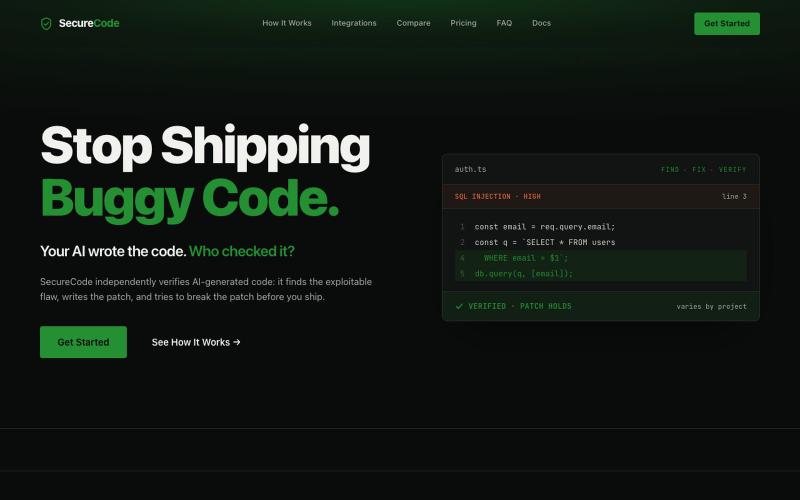
Independently verifies AI-generated code for exploitable flaws and provides verified patches.

@usesecurecode · X
Free Starter is $0 forever. 3 scan credits 1 free Attacker Mode run (20 credits) Real-time SAST Dependency checking Fix previews Signing up is free and gives you scans to try it out. free&utm_content=06_start-free#pricing #vibecoding
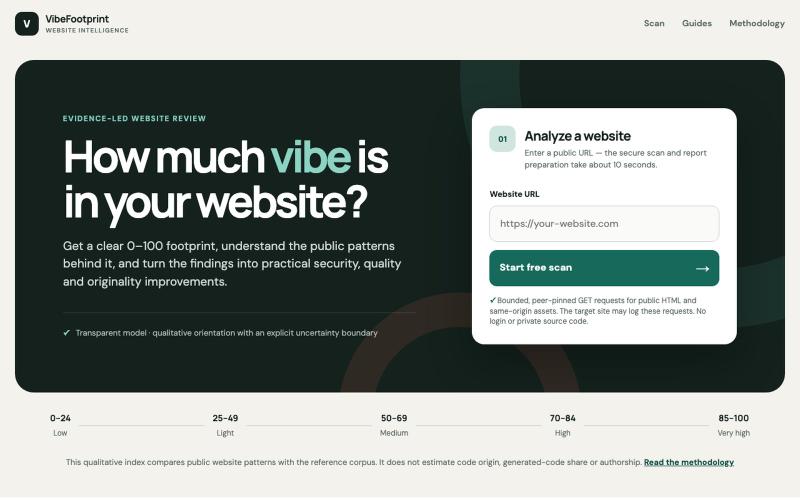
Analyze websites for vibe-coding patterns and security headers without signing in.
u/RockettBits · Reddit
I built a tool that tells you why a website “looks vibe coded” and how to improve it. Some of us use vibe coding because it’s insanely fast, and honestly, a lot of the results are pretty good. But there’s also this weird thing where you open a website and can almost instantly tell it was vibe coded. Same cards, same rounded corners, same gradients, same spacing, same component-library feel. People usually just call it “AI slop,” but I wanted to understand what actually creates that feeling.