
实用工具1 month ago
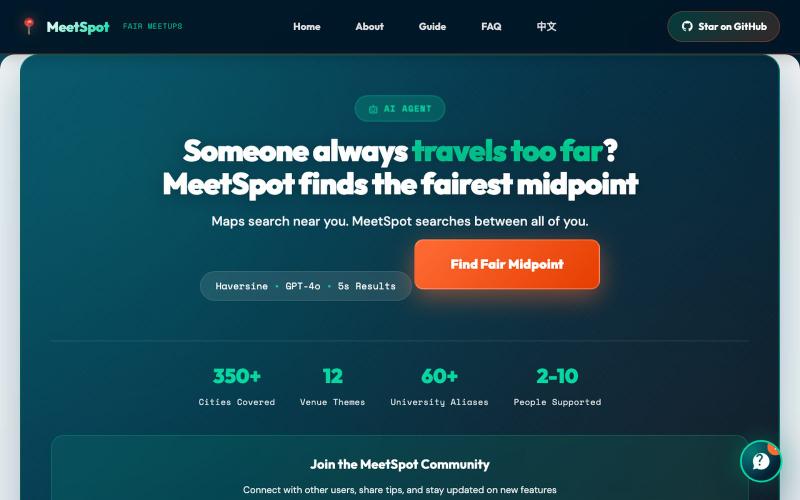
MeetSpot - AI Meeting Point Finder for Groups
为 2-10 人寻找最公平的聚会地点,AI 推荐咖啡厅、餐厅等场所。
Open source
MeetSpot 聚点 — 多人聚会地点智能推荐工具,输入 2-10 人地址,用球面几何算法计算公平中点,AI 评分推荐附近高评分场所,覆盖 350+ 城市,免费使用无需注册。
完整作品展
技术栈
3 projects
为 2-10 人寻找最公平的聚会地点,AI 推荐咖啡厅、餐厅等场所。
MeetSpot 聚点 — 多人聚会地点智能推荐工具,输入 2-10 人地址,用球面几何算法计算公平中点,AI 评分推荐附近高评分场所,覆盖 350+ 城市,免费使用无需注册。
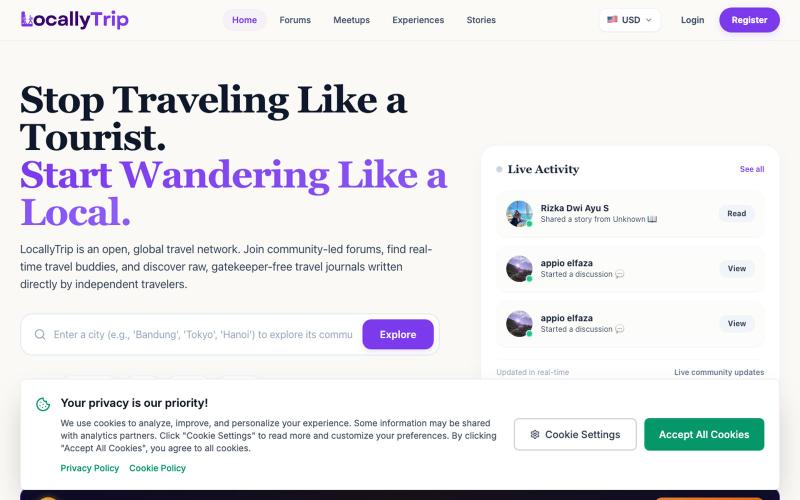
与本地旅行者和向导连接,参加社区聚会及预订真实体验。

@nopecode369 · X
This completely resonates. I actually poured my entire heart and passion into building for this exact reason. It’s designed as a dedicated home where real travelers, local guides, photographers, and trip planners can finally connect organically
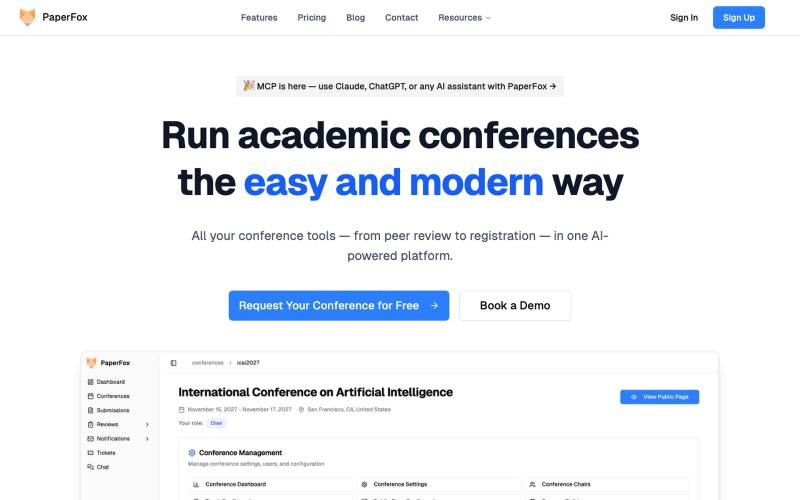
管理学术会议:提交和审阅论文、处理日程安排和注册。

@harryjwang · X
I've used many of the major conference systems. Plenty still have docs as an unsearchable static site — or worse, as PDFs that stopped tracking the product three versions ago. Somehow, still true in 2026. We took an AI-first path with instead. Our docs are generated from the codebase itself. A custom Claude Code skill writes each page and retakes the screenshots whenever a feature changes — so the docs don't drift from the product. Every page still gets reviewed by a human before it ships. Now you can talk to them, too. We just shipped "Ask AI" over our docs: This feature also turned out to be a nice teaching case for agentic RAG vs. classic RAG: • Classic RAG: chunk → embed → vector DB → retrieve once, by fixed rules • Agentic RAG: hand the model a search tool and let it drive — write a query, read the results, rewrite, retry At more than 100 pages, still no vector database needed. And every answer cites the exact page it came from. #Age