FeedLog — Open-Source Feedback Tool with Built-in AI
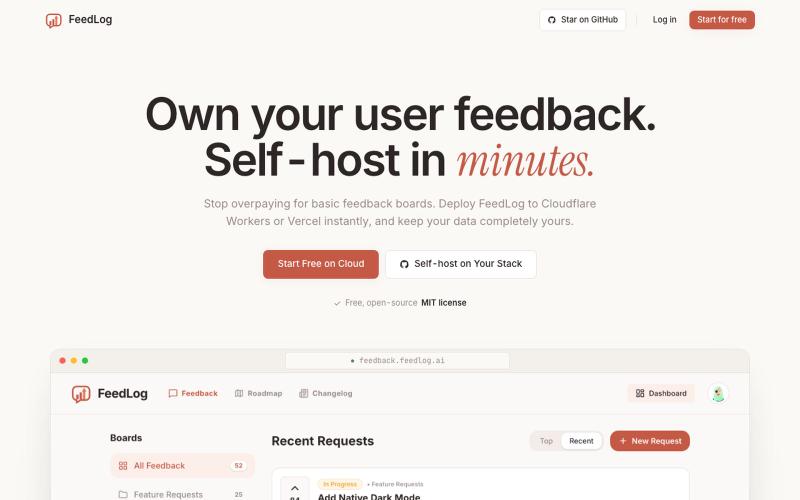
FeedLog是开源AI反馈工具,免费收集和管理用户需求。
@kngkng182542 · X
If you're paying for Canny, give FeedLog a look. Same workflow for collecting feedback and managing feature requests, but free during launch.
完整作品展
技术栈
60 projects

FeedLog是开源AI反馈工具,免费收集和管理用户需求。
@kngkng182542 · X
If you're paying for Canny, give FeedLog a look. Same workflow for collecting feedback and managing feature requests, but free during launch.

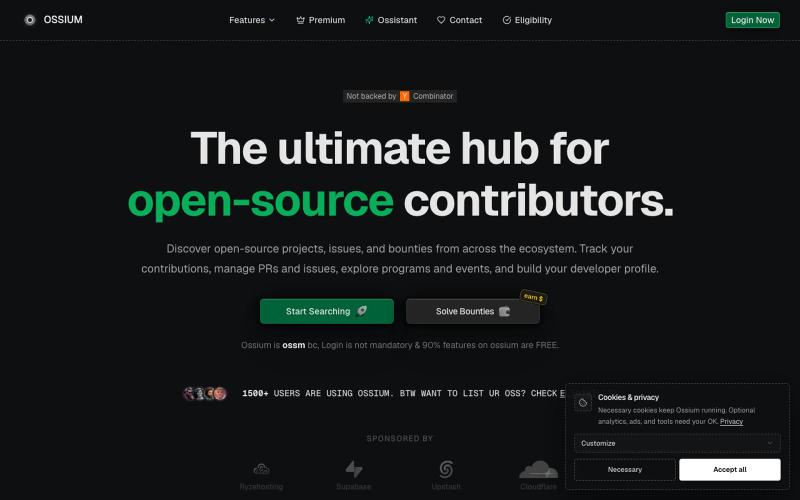
在仪表板中发现热门开源项目,追踪您的PR和问题。
@manixh · X


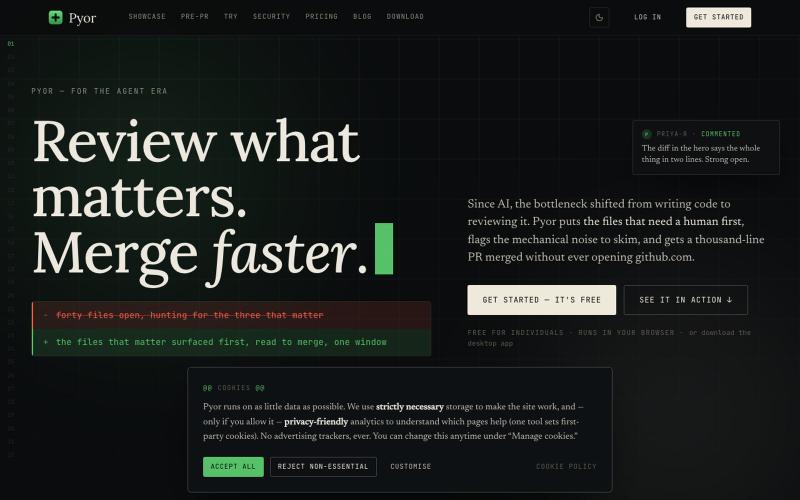
用Pyor原生应用审查GitHub的PR,无需打开github.com。
othmanosx · HN
I still don't like the fact that AI is adding more stuff for us to read, it's accelerating the code production but slowing down the code review. I built my own code reviewer as well ( https://pyor.review/ ), surfacing the important stuff first is the right track, but adding more stuff to read is daunting, but asking AI to just point you to what you need to focus on and skim the noise is what I'm leaning more towards.

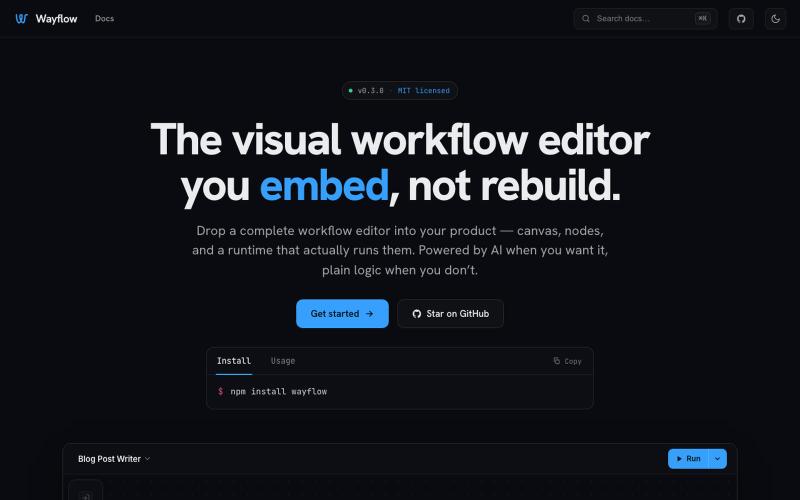
可嵌入的可视化工作流编辑器,支持AI驱动或纯逻辑设计。
tahazsh · HN
Hi! I’m Taha. In many agentic products that support workflows (including one I worked on), I noticed they either don’t support node-based editors, or use React Flow and go through the difficult work of integrating it into their product to run it and work with their existing logic. So I thought about creating a tool that could help with this by closing the gap between the editor and the runtime. That’s why I created Wayflow. The basic architecture is simple: you just need to create a graph (which is a JSON object) that the runtime knows how to run. The runtime doesn’t care where that graph is coming from, it just needs the right schema. And with the help of the editor, you can create the graph, and then export it or directly save it on your backend in your database. And then when you want to execute it, you just hand it to the runtime. The runtime can either stream the execution (which is useful for the editor), or give you the final result. How you execute the graph is up to you: t

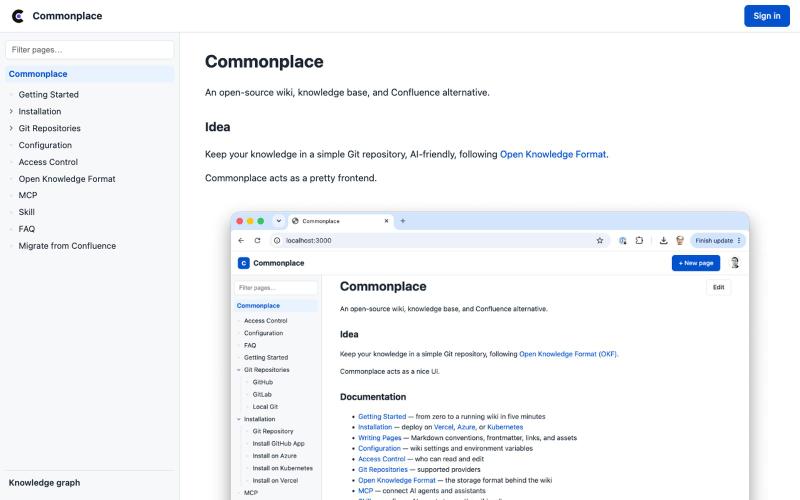
A GitHub-backed wiki for Open Knowledge Format bundles
aiobe · HN
I built Commonplace because I wanted to learn more about Google's Open Knowledge Format for knowledge sharing with human and agents. At the same time, Atlassian announced it will start using customer cloud data to train its AI models (opt-out is Enterprise-only), which made a self-hosted Confluence alternative feel timely. The idea: - Use a Git repository that follows Open Knowledge Format with plain Markdown - Commonplace is just a stateless frontend on top (nice UI, but no database, no backups

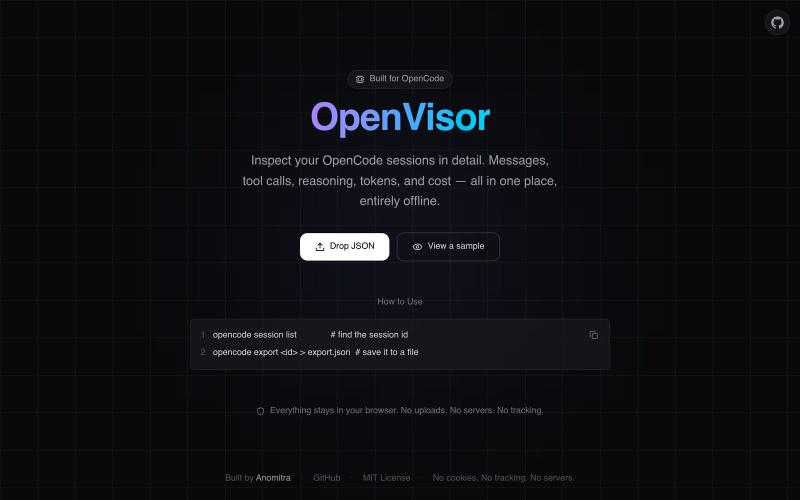
Inspect your OpenCode sessions in detail. Messages, tool calls, reasoning, tokens, and cost — all in one place.
shadeslayer_ · HN
Openvisor – A Session Explorer for OpenCode

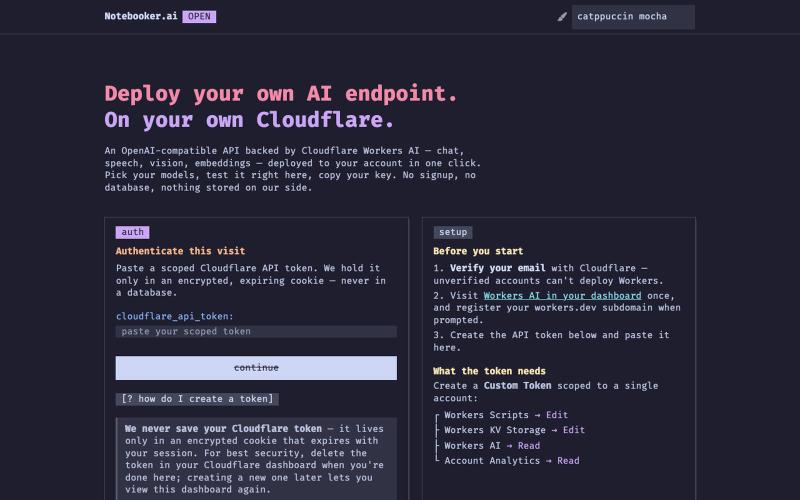
在 Cloudflare 上一键部署 OpenAI 兼容的 AI 端点。
mistakevin · HN
OpenAI-Compatible Cloudflare AI Endpoint Generator

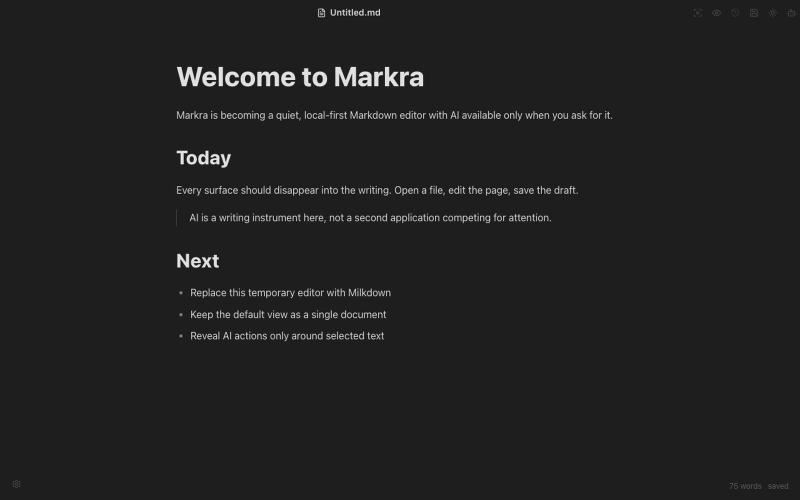
开源Markdown编辑器,支持本地存储、跨平台和AI辅助编辑。
Markra — 本地优先的开源所见即所得 Markdown 编辑器,支持 Web、macOS、Windows 和 Linux,AI 修改可预览后应用 - [更多介绍](https://github.com/markrahq/markra/blob/main/README.zh-CN.md)

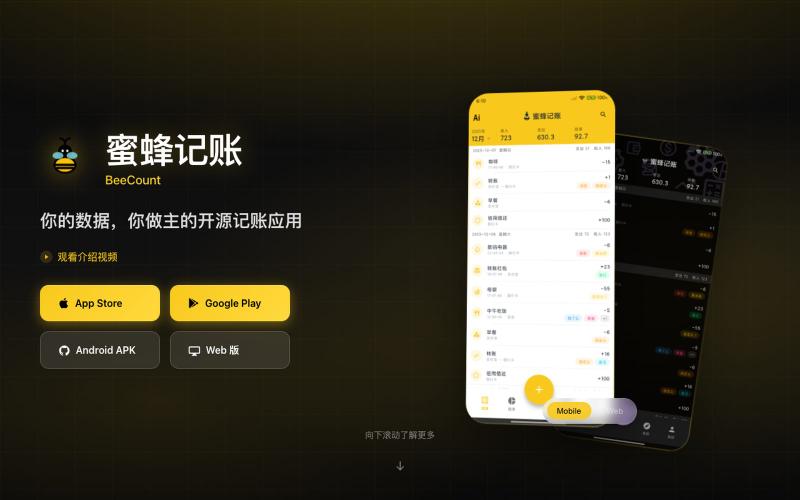
开源个人记账应用,支持多端同步、AI 账单识别和离线使用。
BeeCount 蜜蜂记账 — 开源跨平台记账 App(Android/iOS/Web),主打数据自主与隐私优先 —— 支持自建 BeeCount Cloud / iCloud / Supabase / WebDAV / S3 多端同步,离线可用,可选 AI 识别账单图片自动记账,无广告无订阅 - [Github](https://github.com/TNT-Likely/BeeCount)

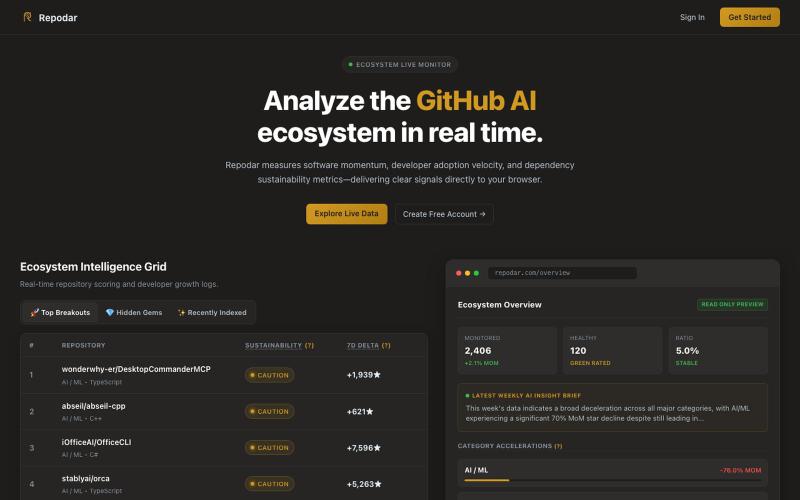
在 GitHub 上发现趋势 AI/ML 仓库,包含实时警报和提交热力图。
@g_saikumar_ · X
Real-time GitHub intelligence for developers, founders, and open-source enthusiasts.

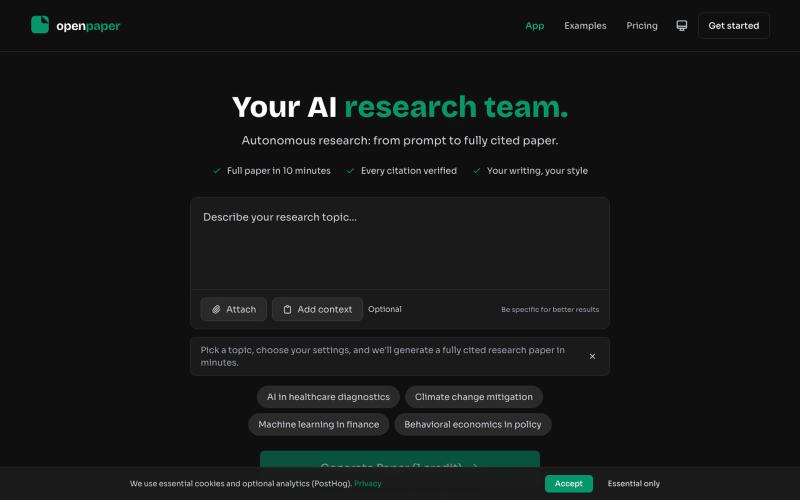
自主AI研究引擎,根据提示词生成带真实引用的完整学术论文。
@fedeponte1 · X
my first saas. i think i built something people actually want and completely failed at the business side. would genuinely love help. openpaper ( writes full, cited research papers from a prompt. research, outline, writing, real citations, export. the honest numbers: - ~2,300 signups - ~1,500 generated a full paper. people actually use it. - ~5 have ever paid. ~$45/mo. activation is great, revenue is basically zero. i've been staring at this for weeks. the paywall is on export (pay ~$12 to download the pdf). but the full cited paper is right there on screen, free, you can read it and copy-paste it. so i'm charging for the gift wrap after handing over the gift. almost nobody even reaches checkout. 76% generate exactly one paper and leave. one-and-done, so subscriptions make no sense. the audience is mostly students and researchers on personal gmail, all over the world, almost none on university or company emails. traffic is x and github. so i genuinely can't tell